Amateur to Pro Milestones · Ages 7–9
Some kids look like they're playing a different sport. Here's their secret.
It isn't talent. It isn't size. At 7–9 it's one trainable thing — and this page shows you how to see it and build it.
The milestones at a glance
- Coordination — balanced turns, speeding the dribble up AND slowing it down. The number one separator.
- Touch force — every touch stays inside playing distance. The ball obeys, not escapes.
- The map — seeing the empty space and accelerating into it.
- Improvement over entertainment — the rare kid who locks in and tries again.
- The parent's move: play 1v1 with them, in a small space. Nothing beats it.
Walk it to the end: a preview of a real Coach Joe assessment session in this bracket — and one action step to run today.
1The body comes first
Why the standout kid seems to float
The average kid fights his own body: everything through the strong foot, turns that need the radius of a bus. The standout is balanced through the whole turn, tight when it needs to be tight — and, the genuinely rare part, he can speed his dribble up AND slow it back down on command.
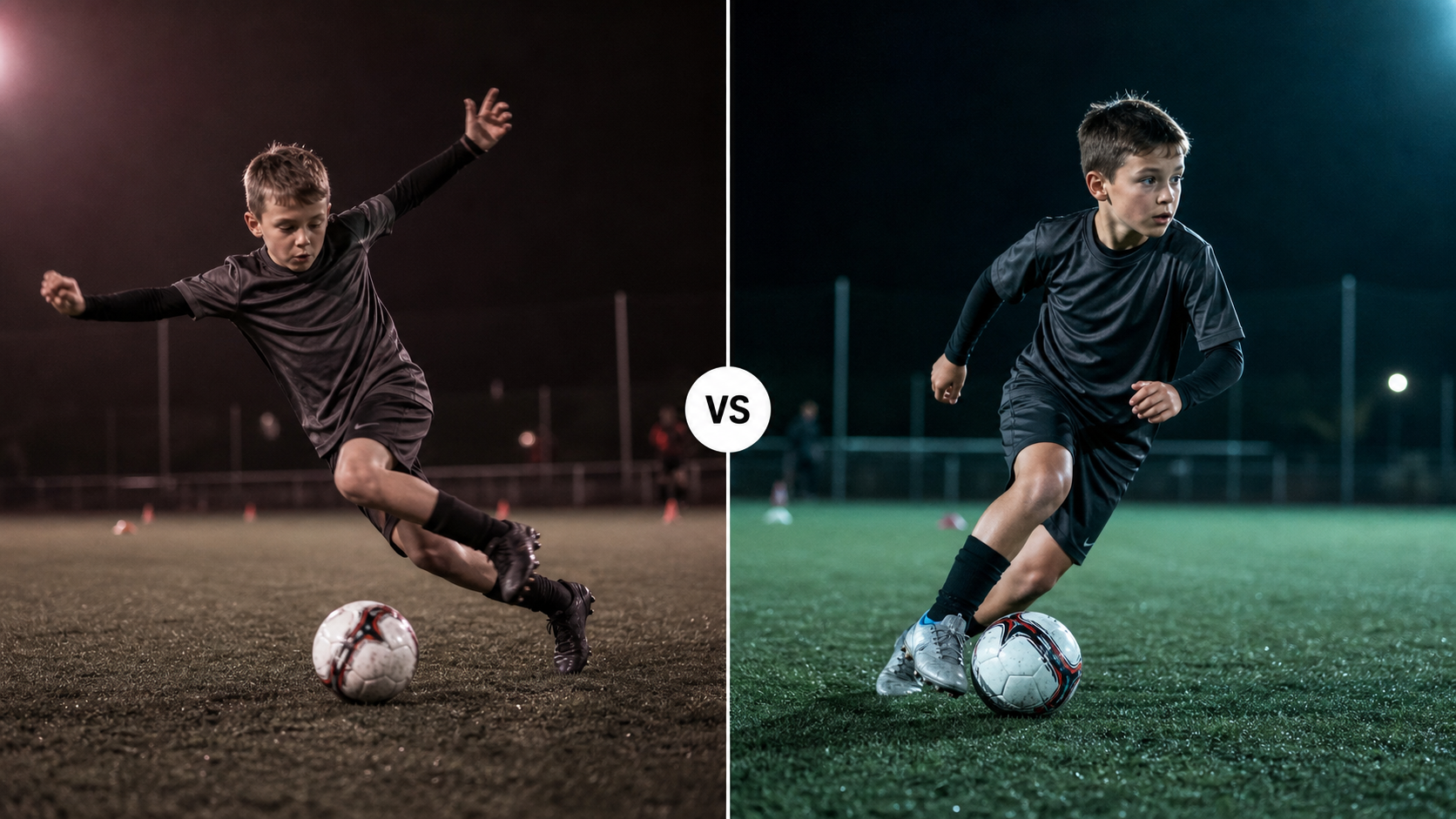
The name for this is coordination, and at 7–9 it's the number one separator. Balance, body positioning, turning — nothing else works without it. It's also the most trainable thing in football right now, because the body is still deciding what it's going to be.
Watch for it: ignore the ball for a minute and watch one kid's TURNS. Tight and balanced, or wide and wobbling? Second opinion: watch him defend for thirty seconds — the kid with balance defends better without ever being taught defending. It never lies.
Honest scale: nothing is polished at 7–9 — even the standouts wobble. You're looking for moments, not mastery.
And once you see the turns, you'll notice the second thing — why the ball keeps escaping from almost everyone. ↓
2The runaway ball
Why the ball obeys some kids and escapes the rest
Most kids haven't learned how much energy a touch needs — every touch flies two metres too far, and the game becomes a chase. The standout has learned touch force: every touch keeps the ball inside playing distance. He commands the ball, not the other way around.
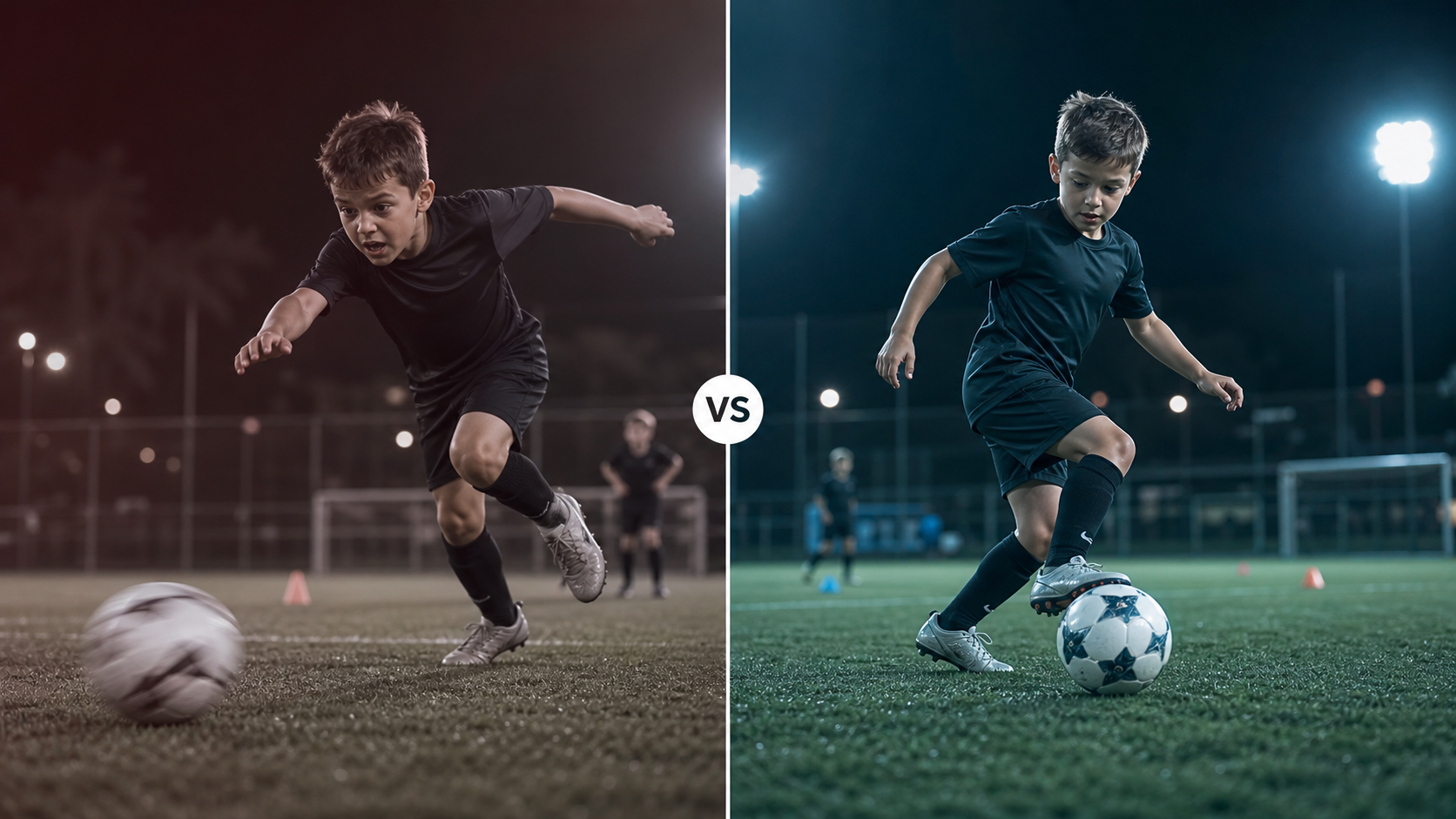
It's not magic — it's feel, built through thousands of touches where somebody let him experiment with soft and hard instead of shouting 'pass it!'. From the sideline you'll see it as MOMENTS: still inconsistent, still a kid — but in those moments, he's the one deciding.
Now the strange one — the kid who never seems to need to look up to know where the goal is. ↓
3The kid with the map
How some kids always know where the goal is
Most kids run in a ball-chasing swarm, tunnel vision locked on. The standout carries a map: he grasps where the empty space is and accelerates into it — which is why his dribbling works and his shots come from better spots.
Watch the wall of players: most kids accelerate straight into the crowd until it swallows them. The standout sees the bulk coming and slows a touch, to try something. Not always successfully — but the decision happened.
Which leaves the quietest separator — the one that predicts everything later. ↓
4The quietest superpower
Entertainment or improvement — which one is your kid here for?
Most kids are at training to be entertained — concentration gone after ten minutes, and that's fine. A rare few are there to get better: they lock in for the full hour, ask how, and try again after it fails.
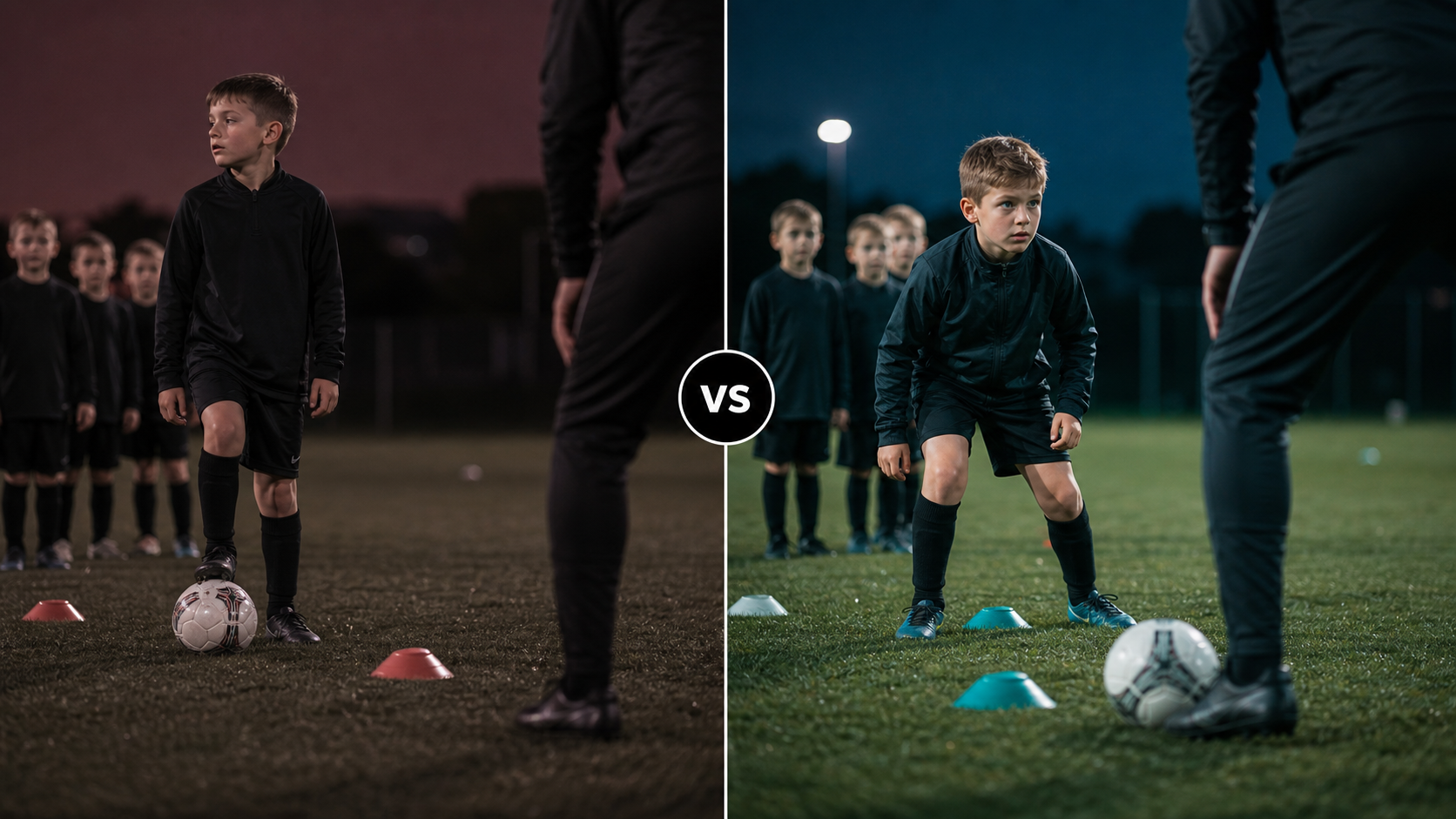
You can't force this one — protect it where it appears: praise the effort and the EXTRA (the ten minutes in the park nobody asked for), never the score. Pressure at this age kills the love that fuels everything later.
All of it grows fastest with one ingredient no coach can provide: you. ↓
5The parent on the pitch
What's the single best thing a parent can do at this age?
Play with them — 1v1, against you. Not drills; dad time, mum time, with a ball. Let them dribble past you, protect the ball a bit, let them struggle, let them win. Your size is a feature, not a problem.
Make the space small: drop two shoes as boundaries and play tight — small space forces braking, turning and finding space all by itself. Can't pass a ball nicely? Throw it — ball after ball for first touches is one of the most useful exercises there is.
On the days they struggle: don't push — invite. Say 'I feel like going for a kick' and go, even alone; they'll come. When they ask YOU to train, always say yes. Lead by example, keep it play, protect the love.
Everything on this page sounds different when you HEAR it happen on grass. Listen. ↓
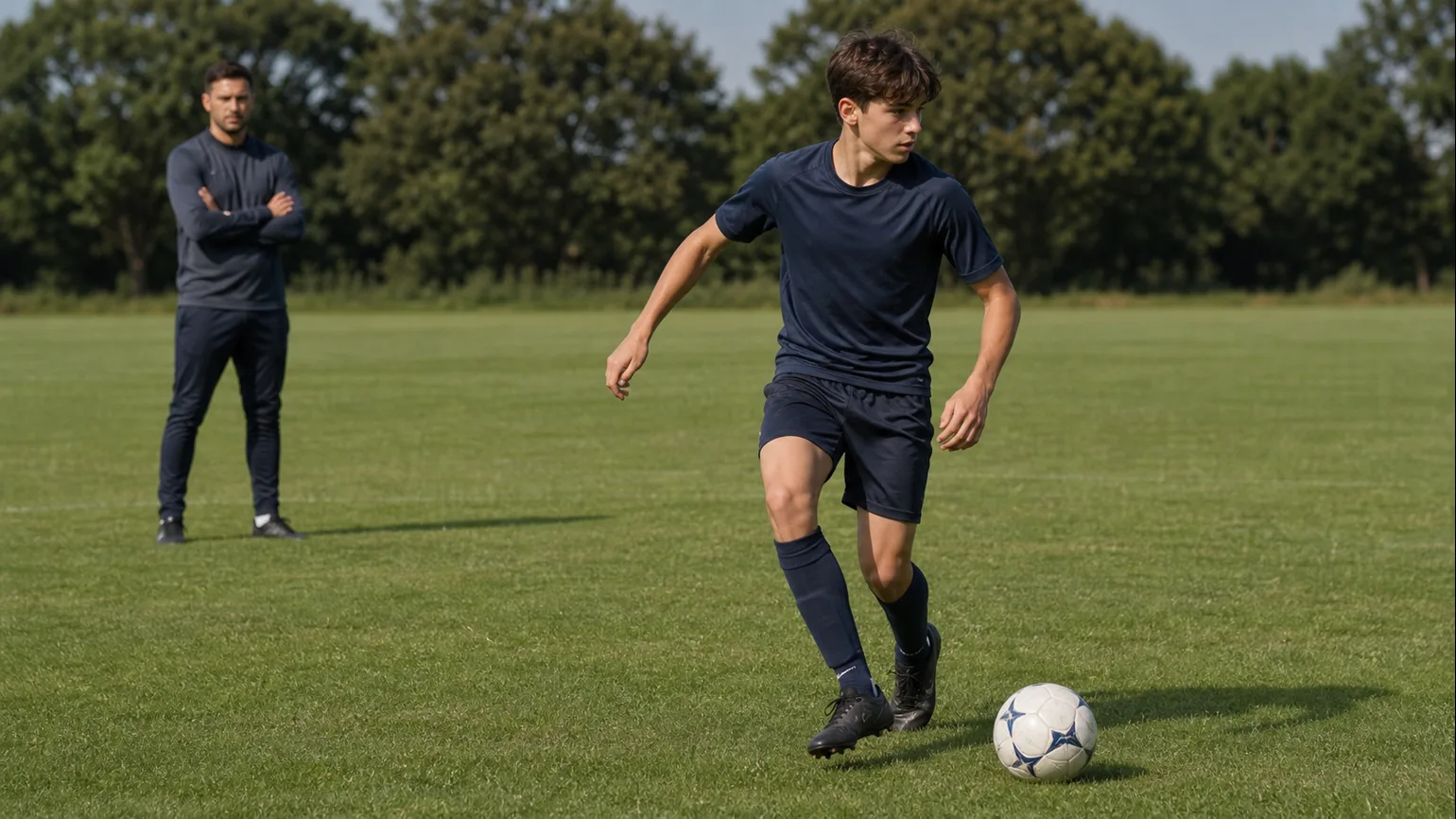
SUGGESTION — they've just read how Coach Joe sees ages 7–9. Short preview of a real assessment session in this bracket — the exact things from this page coached on grass. Pick the strongest assessment clip available.
Now your turn — the number one separator of this whole age, trained with two minutes and a broomstick. ↓
Try this today
The stick drill — hips that move without the upper body
Coordination starts in the middle of the body. Two minutes, a broomstick, any patch of floor.
- Hold the stick horizontally in both hands at chest height — or rest it across the shoulders.
- Feet planted: turn the HIPS side to side while the stick and upper body stay completely still. 20 seconds, slow.
- Reverse it: hips locked, rotate the UPPER body and stick side to side. 20 seconds.
- Add the ball: roll it side to side with the sole while the hips do the turning and the stick stays quiet.
- Finish with slow dribbling — hips steering the ball, upper body calm. Short, playful rounds.
Watch for one thing: does the top half stay quiet while the hips work? That separation IS the coordination the standouts have.
At 7–9 the scoreboard lies. The truth is in the turns, the touch, the map in the head, and the rare kid who's there to get better. Every piece is trainable — and the parent who can SEE it is worth more than any academy fee.
The Football Parent's Journey by Coach Joe
Everything the football system never tells parents — the car ride home, the coach's buckets, the money map, the exposure playbook — organized by your child's age.
Get startedDefending a 1vs1 · The Pro First Touch · Speed Control · The Trained Mind · The Tank