Amateur to Pro Milestones · Ages 10–12
What a player collects now is what fires at 15 — without thinking
10–12 is the collecting window. It doesn't reopen. Everything learned now runs on autopilot later — this is what belongs in the collection.
The milestones at a glance
- Kill the weak-foot avoidance — at 13 both feet stop being impressive and start being required.
- The rarest movements — braking with the ball and the lateral cut at speed.
- Stockpile skill variations — collect 30–60 knowing a pro ends up using 4–7.
- Protect the dribbler — the attempt is worth more than the outcome.
- The parent's move: a proper assessment, guided weak-spot work, kept deliberately fun.
Walk it to the end: a preview of a real Coach Joe assessment session in this bracket — and one action step to run today.
1The hidden avoidance
Where did the weak foot go?
The weak-foot avoidance hasn't gone anywhere — it's gone underground. The whole body now angles itself so the strong foot can keep doing every job. It looks almost skillful. It's a lie that costs a career later — at 13, both feet stop being impressive and start being required.
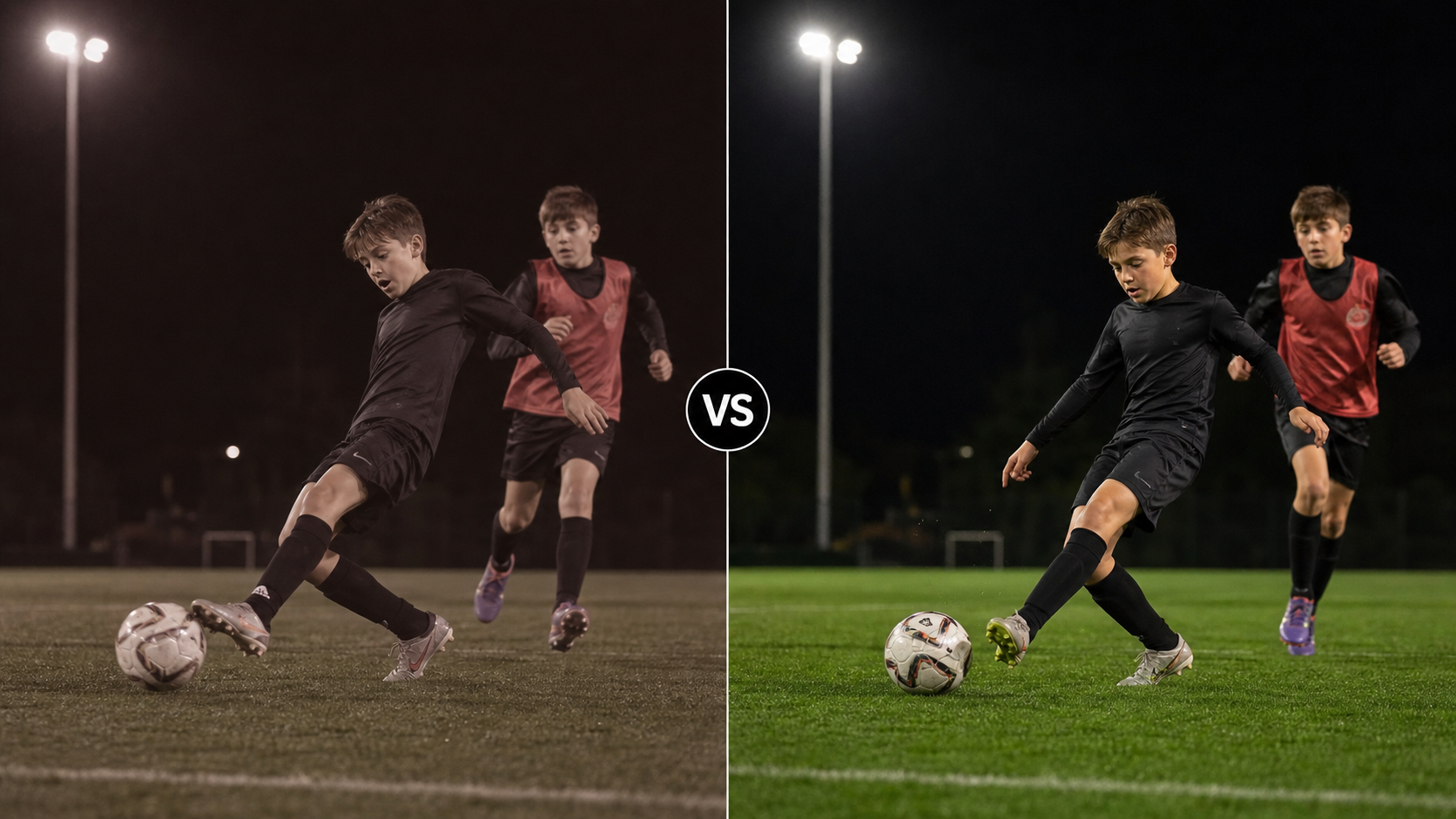
The standout has nothing to hide, so every action is faster. Both feet show up in real games, not just warm-ups. And left alone, the gap grows: kids training by themselves train their strengths — nobody volunteers to fail — so the weak side quietly widens until it bites.
Watch for it: count how many times a player repositions his body to avoid his weak foot in one half. That number is the size of the bill arriving at 13.
The unglamorous fix: a proper assessment — knowing exactly which weak spots to attack — is worth more than another season of accidentally training the strengths.
The second thing in the collection is even rarer — most kids never find the shelf it's on. ↓
2The rarest movements
Can you brake with the ball?
Most players can now run WITH the ball in a straight line — and almost none can do anything sideways. The two hardest movements of this age are nearly extinct: braking with the ball, and the lateral cut at full speed.

Speed control is a duel-winner disguised as a boring skill: the player who can change speed owns the defender's reactions. That ownership starts here, at 11 — along with the three-part body (hips separate from a stabilized center) that makes kids look 'naturally quick' at fifteen.
Which brings us to the shopping spree itself — and the most expensive mistake of this age. ↓
3The collection
Why two good moves are a trap
Around now, two or three basic moves start winning games — push past the defender and run. It works, the crowd claps, and the player stops collecting. That's the trap: it works at 11 because defenders lag behind. It stops working the year they catch up.
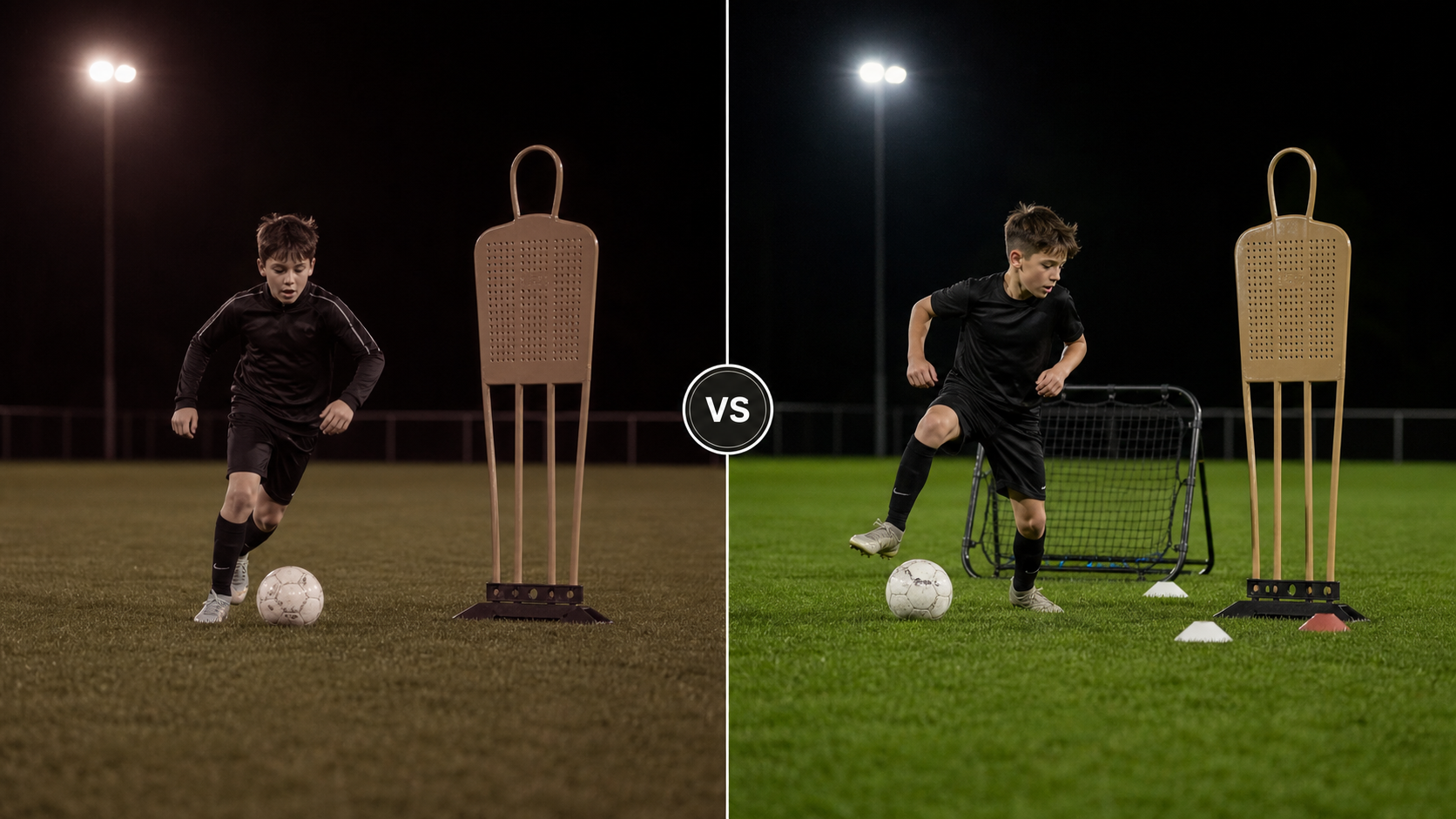
The standout keeps stockpiling variations — new moves, both directions, banked deliberately for subconscious use at 15. Collect 30–60 knowing a professional ends up USING four to seven — nobody knows yet which four will be his, and every collected movement makes the whole game faster anyway.
This is the age of boring practice — and that's a compliment. Thousands of touches, wall passes with the weak foot, over and over. Standouts can DO boring, because they feel themselves getting better. This is where professionals are quietly made.
Coach Joe's rule for this age: learn it slow until it's smooth, both directions until neither feels weird, then add speed. A move that only works one way isn't collected yet — it's borrowed.
And while the collection grows, one instinct needs protecting — the one adults accidentally coach OUT of kids. ↓
4Protect the dribbler
Should he pass more? (Probably not)
Around 11 a sideline voice starts saying 'pass it earlier'. For the ambitious player, the development priority in the opponent's half is the opposite: take players on. Again and again. Youth football is an individual game disguised as a team sport — passing to a weaker teammate to 'play the right way' develops nobody.
The duels attempted now — especially the failed ones — are the exact pressure situations his 15-year-old self needs pre-solved. One player rehearses risk-avoidance a thousand times; the other rehearses looking for opportunities. Both habits compound for years. Only one builds the player who makes dangerous things happen.
Watch for it: does he look for the take-on in the opponent's half, or pass the responsibility away? At this age, the attempt is worth more than the outcome.
And behind every collector stands the same quiet figure: the adult who decides what gets collected. ↓
5The parent in the collecting years
How do you guide the collection without killing the fun?
What you're really building isn't just the moves — it's the HABIT of deliberate practice. Skills can be learned later, but later it's harder: more pressure, less time, and the habit was never built. Installed now, it carries everything after.
Guide the weak spots: left alone, kids train their strengths. A parent or individual coach who shows them exercises that target what's actually weak changes the trajectory — start with a proper assessment instead of guessing for two years.
Keep it fun — deliberately: short sessions, mix the wall-work with what they love, praise the attempts and the extra time — never the outcome. The moment it feels like school, the collection stops.
First — hear what all of this sounds like in a real session. ↓
SUGGESTION — they've just read how Coach Joe sees ages 10–12. Short preview of a real assessment session in this bracket — the exact things from this page coached on grass. Pick the strongest assessment clip available.
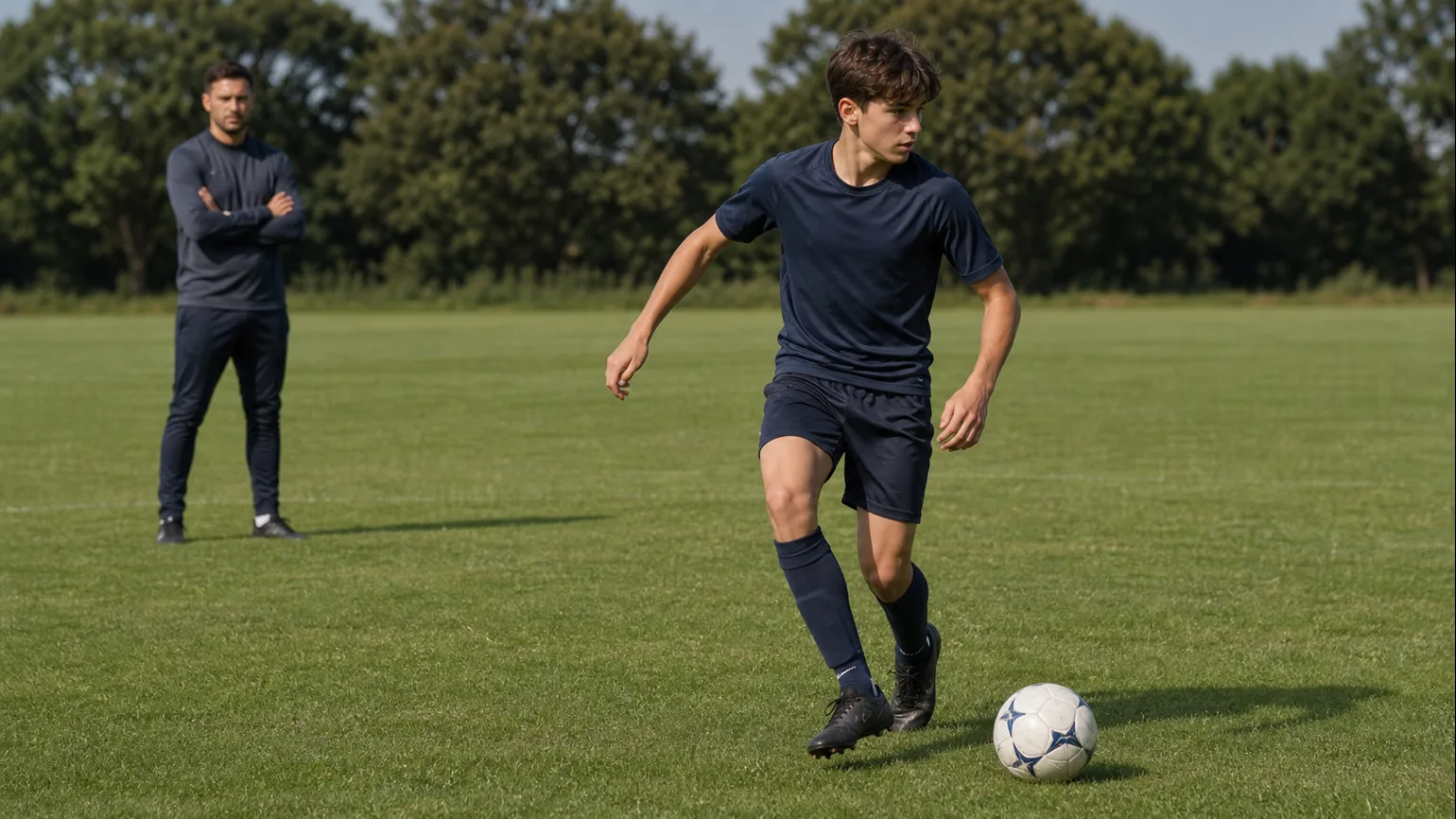
Ready to add one real piece to the collection today? Here's one straight from Coach Joe's tutorials. ↓
Try this today
One skill move — learned properly, not half
This is the collecting age, so collect the right way: one variation, learned slow, both directions, then at speed.
VIDEO PLACEHOLDER — Joe: drop in ONE of your existing skill move tutorials here (the variation that fits this bracket best).
The rule while learning: slow until it's smooth, both directions until neither feels weird, then speed.
10–12 in one sentence: kill the weak-foot avoidance before defenders learn to use it, master the movements almost nobody has, keep stockpiling variations while the window is open, and protect the dribbler from being coached into a passer. The collection closes at 13. What's in it by then runs the rest of the career.
The Football Parent's Journey by Coach Joe
Everything the football system never tells parents — the car ride home, the coach's buckets, the money map, the exposure playbook — organized by your child's age.
Get startedBeating a Player in a 1vs1
The duel, trained day by day: the 10-day quick-success lane, 30 days of session plans and Coach Joe AI — built from the same sessions pro-pathway players train in.
Get startedDefending a 1vs1 · The Pro First Touch · Speed Control · The Trained Mind · The Tank