Amateur to Pro Milestones · Ages 16+
The unpaid professional
Nobody tells you when it happens — but from 16, everybody judges you by a contract you don't have yet.
The milestones at a glance
- Live the full professional standard — sleep, food, preparation, recovery — before anyone pays for it.
- Own the 98% — match time is 2% of a pro's life; every training session is the competition.
- The trained mind — failure costs one evening and produces one page of notes.
- The five-minute verdict — trials are decided before anyone learns your name.
- The parent's move: open the right doors and organize the medical detail work.
Walk it to the end: a preview of a real Coach Joe assessment session in this bracket — and one action step to run today.
1The standard without the salary
What does an unpaid professional actually do?
The average player behaves like a pro when someone important is watching — and calls his fitness 'close to' the requirement, which every coach silently reads as below it. The standout lives the standard when nobody's watching: sleep, food, preparation, recovery. Full pro-level fitness. Not near it. At it.

Understand what full fitness is FOR: at 16 you can find yourself against grown men, double your strength. Skill survives that only when the tank does — the more skill you have, the fitter you must be to OUTPUT it. And one deadline said out loud: the skill set has to exist by now. If it doesn't, it becomes an emergency project — identify the most important missing skill and go after it hardcore, starting this week.
The uncomfortable truth: at this level everyone left standing is good. What the standard buys you is the RIGHT to be judged on your football at all — the players who skip it never even reach the judging.
And once you're being judged, you discover who you're actually competing against. ↓
2The individual sport
Who are you really competing with?
At the high level, football quietly becomes an individual sport — you compete with your own teammates for positions, minutes and trust. The math is merciless: roughly 2% of a professional's life is match time. The other 98% is training — and the 98% decides everything.

The weeks without minutes are the exam. The average player sulks through exactly the weeks that decide whether the chance ever comes; the standout puts in extra work ESPECIALLY when he's not playing. And widen the benchmark: not your teammates — the best players of your age in the world. Being best in your team means nothing at a trial, and beating teammates at 80% quietly teaches you to give less.
Which is why the third pillar stops being optional here — the one between the ears. ↓
3The trained mind
Why mindset decides careers from here
Dealing with failure, setting goals, honest self-review, handling pressure — these are trained skills, not personality traits. The average player loses weeks to one bad game because nothing was ever trained to handle it. The standout reviews himself with honest eyes and prepares for trials deliberately instead of hoping. Failure costs him one evening and produces one page of notes. That habit — not talent — is what coaches call 'mentality'.
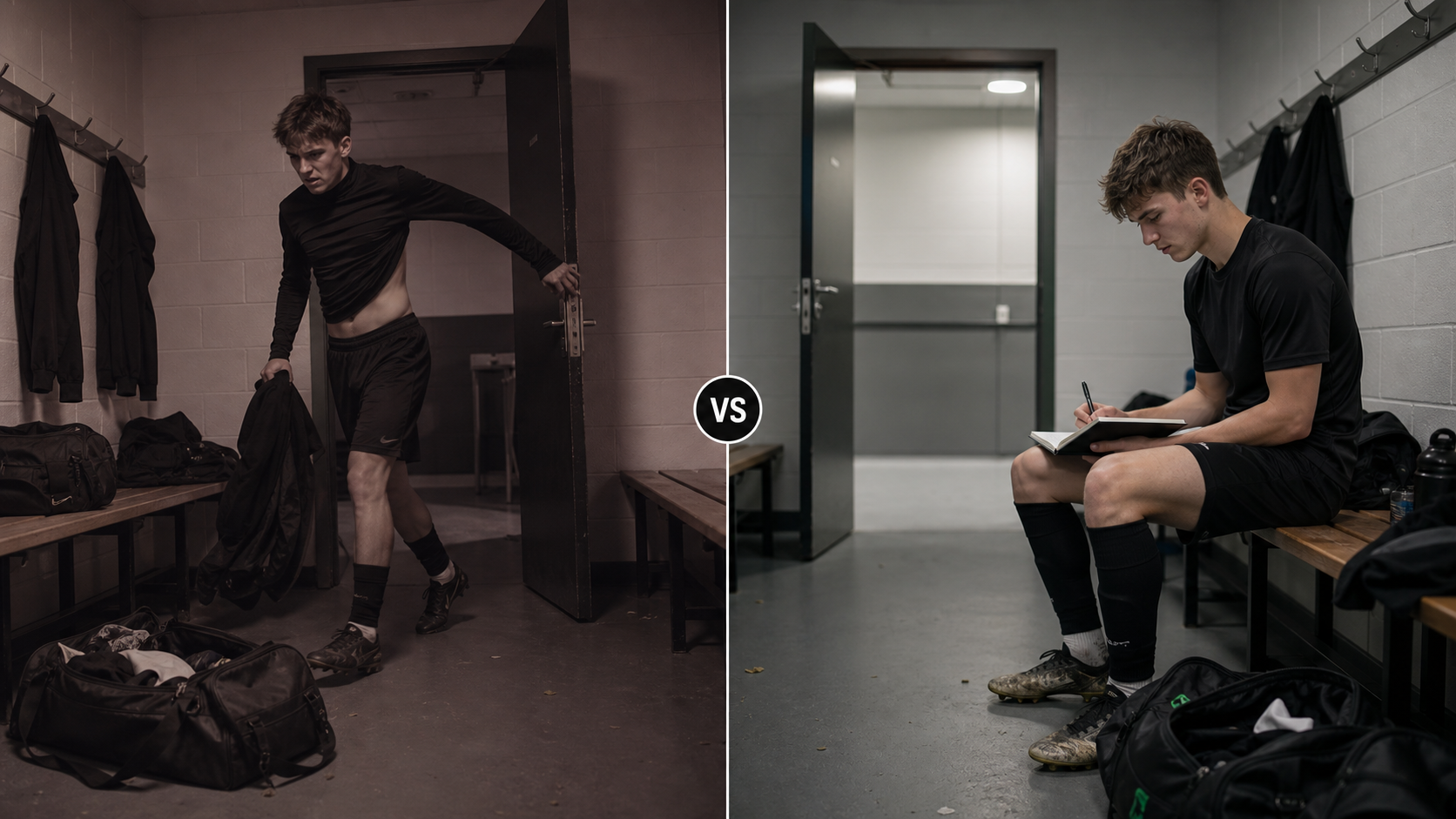
Coach Joe's ranking is blunt: what you do in your FREE time — recovery, sleep, the invisible hours — is the number one determinant. Talent only decides how fast you learn, and everybody can learn. Handling pressure is standout factor number four, right next to 1v1 attacking, 1v1 defending and fitness.
And there's one moment where all three pillars get judged in five minutes flat: the trial. ↓
4The five-minute verdict
What actually happens when someone finally watches you
Coaches sort everyone into buckets fast — often within the first minutes: the starters they'd fight for, the useful pieces, the projects. And once you're in a bucket, everything you do afterwards gets read through it. So the trial isn't 90 minutes long — it's the first five. The warm-up habits, the first touch under the first pressure, the sprint back after the first loss.
Know the calendar: 17–18 is when the trials tend to come — 16 is when you get ready. And beware the weak-environment trap: good players in easy leagues train their brain into easy mode without noticing. If the environment doesn't demand your best, you have to.
And if you're not inside a big academy, all of this comes with one extra problem. ↓
5The unicorn problem
How do you know where you stand when you're the best around?
Outside a top academy, the hardest part is that you DON'T know where you stand — the environment isn't strong enough to tell you. Being the best player anyone around you has seen is information about your postcode, not your level. Build yourself a benchmark: someone with real experience — a former professional — or study the top players of your own age online and compare honestly. You can't train a gap you can't see.
And for the families walking this final stretch together — there's real work now that only a parent can do. ↓
6The parent in the final stretch
What can a parent still do when the player has to drive?
Build structures and open doors. The player owns the work now — but connections are still adult work: the honest assessors, the right environments, the right handshake (not the loudest agency).
And own the medical detail work: endurance and lactate testing, aerobic and anaerobic capacity, a chiropractic assessment of the whole body. The pattern Coach Joe sees again and again: the player finally moves up a level, the untreated weak spot flares up right there, and the big chance is spent injured. Clear it now, not then.
Want to hear how Coach Joe reads a player at this level? Listen closely. ↓
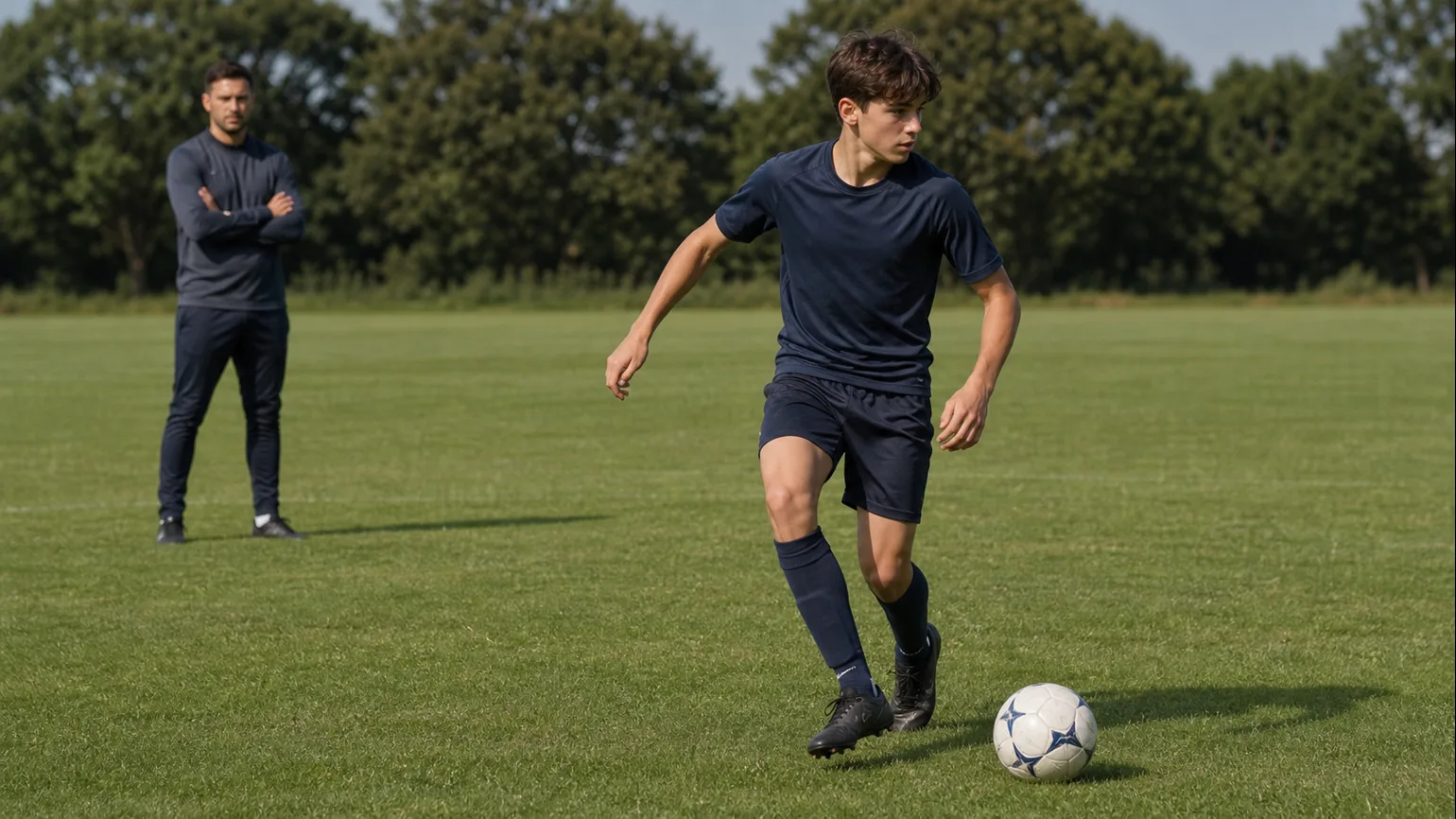
SUGGESTION — they've just read how Coach Joe sees ages 16+. Short preview of a real assessment session in this bracket — the exact things from this page coached on grass. Pick the strongest assessment clip available.
And want to see what the invisible 98% actually looks like at the top? Watch closely. ↓
Try this today
Watch what pro-level detail work actually looks like
You can't shortcut this one, but you can see it: inside a full pro session, the same detail gets corrected, repeated, and corrected again until it holds. That obsession IS the 98% nobody films.
VIDEO PLACEHOLDER — Joe: cut 2–3 moments from a full pro session showing detail work on ONE point (the same correction repeated until it holds).
Then apply the standard to yourself: pick ONE detail in your game this week and give it that same treatment — every session, until it stops needing your attention.
At 16+ the job already exists — only the salary is missing. Live the standard before anyone pays for it, own the 98% between matches, train the mind like a muscle, and walk into the five-minute verdict prepared. The players who make it from here aren't waiting for a chance. They're forcing one.
The Football Parent's Journey by Coach Joe
Everything the football system never tells parents — the car ride home, the coach's buckets, the money map, the exposure playbook — organized by your child's age.
Get startedBeating a Player in a 1vs1
The duel, trained day by day: the 10-day quick-success lane, 30 days of session plans and Coach Joe AI — built from the same sessions pro-pathway players train in.
Get startedDefending a 1vs1 · The Pro First Touch · Speed Control · The Trained Mind · The Tank