For football parents · Built from real pro pathways

Your child is chasing pro football. Nobody taught you your job.

The wasted years, the burned money, the pressure that breaks kids — avoidable. This is everything the system never tells parents, taught the way Coach Joe would tell you over a coffee.

By Coach Joe — former professional in Europe, 10 years of individual coaching, players developed all the way to the A-League and the New Zealand 2026 World Cup squad.

On this page

  • Two complete teachings, free — The Car Ride Home and The Sock Reset. Use them this weekend.
  • The parent's whole roadmap, age by age — what your job is at 7–9, 10–12, 13–15 and 16+.
  • The proof: one family, ten years, two brothers who turned professional.

Read it to the end — the last stage answers the question every football parent whispers.

The part nobody says out loud

You don't actually know if you're helping or hurting

Maybe you've spent real money on camps and coaches and can't tell what worked. Maybe the ride home after the benching was silent and you replayed it all night. Or maybe you just read the Milestones for your child's age — and now you know what a standout looks like, but not what YOU are supposed to do about it.

Here's the truth, and then the relief: some of what you're doing right now is probably slowing your child down. That's not a failure — nobody teaches this. Clubs develop players for this season; the system assumes the parent will figure the rest out. Almost none do — and talented kids pay for it in wasted years.

The Milestones show WHAT separates players. This is the other half — because knowing what a standout looks like changes nothing; being the parent who builds one changes everything.

So instead of telling you what's inside — let me just teach you. Here are two complete teachings, free. Use them this week.

The Car Ride Home

The ride home after a game is where careers are made or broken. Most parents use it to analyze: the missed chance, the soft tackle, what the coach should have done. It feels like support. Here's what it actually trains: your child starts playing PASSIVELY — safe, invisible football — because every risky action on the pitch is a potential conversation in the car. You're not reviewing the game. You're teaching them to fear it.

The rule: one sentence, then silence. “I loved watching you play today. What was your favorite moment out there?” Then let THEM drive the conversation. If they want to talk tactics, they'll start. If they don't, the silence is the lesson working.

Why it works: praise attached to outcomes (goals, wins) teaches kids to fear the moments that produce outcomes — they stop shooting so they can't miss. Attention without judgment keeps the risk-taking alive, and risk-taking is where development lives. Watch for it: within a few games of consistent car-ride silence, brave actions come back.

It goes deeper

The moment that decides more than any training plan

Watch your child right after a big mistake. The head drops. The next ball gets avoided. Many kids quietly hide for the rest of the game — and most sideline encouragement lands as more pressure. What they actually need in that moment is a reset they control themselves.

Here it is — the second free teaching, and one of the most valuable things Coach Joe gives the families he works with.

The Sock Reset

The most important mental skill in your child's game is not confidence — it's how they handle failure. Every level they climb, the mistakes get bigger and more public. The players who make it aren't the ones who fail less; they're the ones who recover faster.

The action step: teach your child one physical trigger. After a big mistake, they pull up their socks, take ONE deep breath, and let the mistake go with the movement. A mental reset anchored to a physical action — the body signals the moment is over, and the head follows. Teach it once at home; after that, a single word from the sideline — “socks” — is all it takes.

Pair it with what you praise: praise goals, and they learn to fear shooting in case they miss. Praise the courage to take the shot, the sprint to win the ball back, and the brave next ball after a reset — and you build a player whose engine doesn't depend on the scoreboard.

Watch for it this weekend: one mistake, one sock pull, one breath — then count how quickly they want the ball again. That speed IS the skill. And it's trainable.

The parent's roadmap — the whole road, concise

Your job changes every three years. Here's the entire road.

This is the actual roadmap, not a table of contents — read it and you're already ahead of most sideline parents tonight. The depth, the exact words and the plans live inside. The road itself is yours free.

It starts where every football story starts: a small kid and a ball that won't leave them alone.

1Ages 7–9 · Protect the obsession

What's your job while they're small?

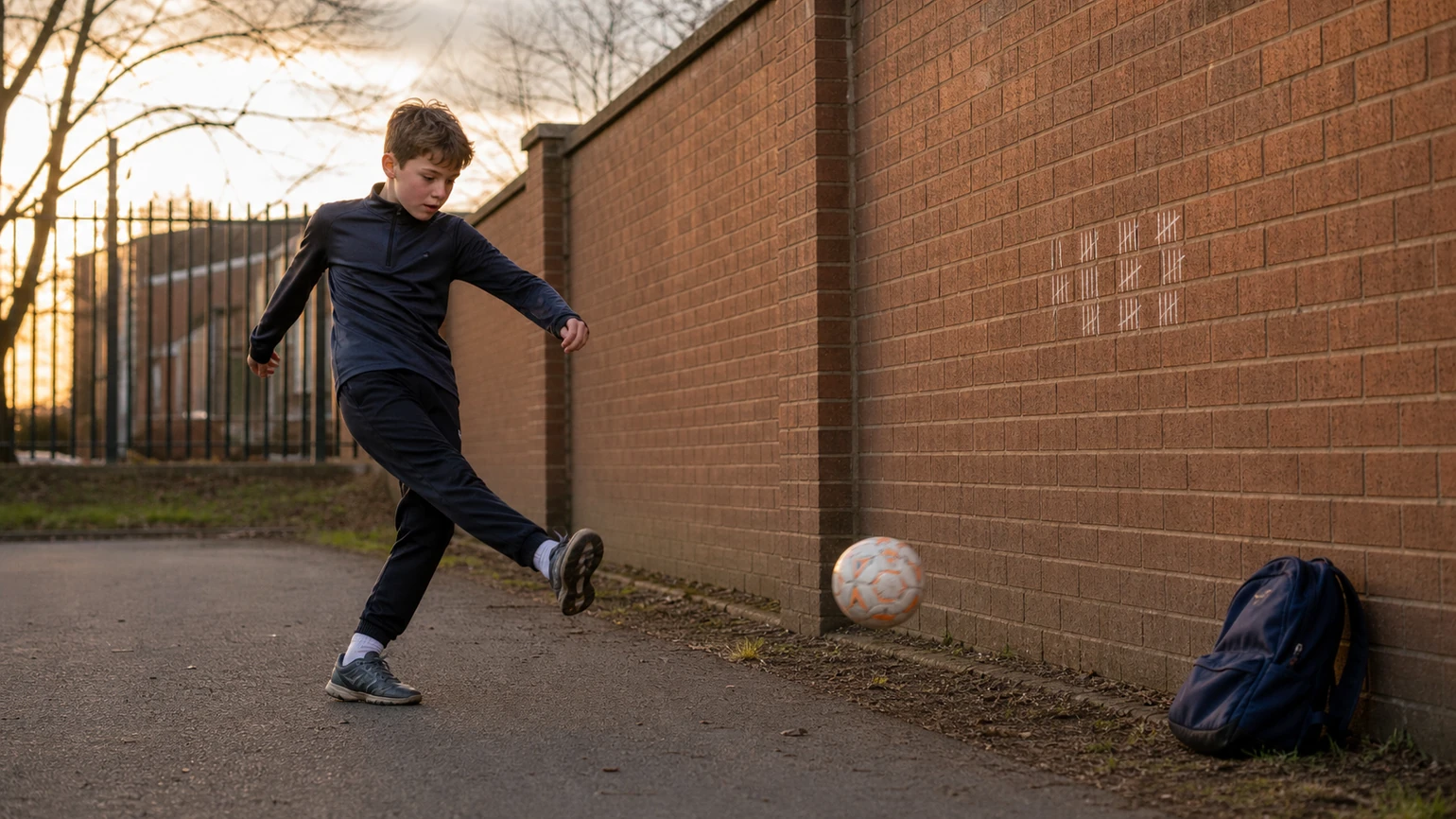
Play, not development plans. The single best thing you can do costs nothing: 1v1 against your own kid in a SMALL marked space — two shoes as boundaries, and braking, turning and space-recognition train themselves. Can't kick? Throw balls at them for first touches; it's one of the most useful exercises there is.

And watch what you praise. Only the effort and the EXTRA — the ten minutes in the park nobody asked for — never the score. On their off days, don't push: say 'I feel like a kick', go alone, and watch them follow.

Opened inside: the full praise system — the exact sentences that build a brave player, and the everyday ones that quietly build a fearful one. Most parents use the fearful ones daily without knowing which they are.

Protect the love long enough, and the collecting window opens. It doesn't reopen.

2Ages 10–12 · Guide the collection

How do you steer practice without killing the fun?

This is the window where thousands of boring touches become the moves that fire subconsciously at 15. Left alone, kids only train their strengths — nobody volunteers to fail — and the gap bites hard at 13. Your job: steer real practice at the weaknesses without turning football into school.

And stop guessing. An honest assessment of where your child actually stands comes first; every training decision follows from it.

Opened inside: how to run that assessment yourself — the 20-minute parent version Coach Joe uses as a starting point — plus how to make weak-foot work feel like a game instead of homework.

The collecting window

Master the collecting years, and the game rewards you with a harder test: the teenage leap.

3Ages 13–15 · Build the support system

What does your child need from you when it gets serious?

An architect, not a playmate. It's not about spending the most — it's the RIGHT people: an honest assessor, the right individual training, nutrition and recovery that keep pointing the same direction. Structure the week so training survives school, hold the accountability, keep one sport the clear priority.

And normalize failure now, before the perfectionism arrives: failing is evidence of working at your limit. Say that sentence at the dinner table this week.

Opened inside: the support-system blueprint — who you actually need and who you don't, what it should cost, the club and coach conversations word for word, and the bad-game car ride at THIS age (it changes).

And then the final stretch — where the player drives, and you clear the road ahead of them.

4Ages 16+ · Open doors and clear the path

What can only a parent still do?

The player owns the work now; you build what only an adult can: connections that genuinely open doors, and the medical detail work almost every family skips — endurance and lactate testing, aerobic capacity, a full body assessment. Every player carries a weak spot, and the pattern is brutal: it flares up exactly when the big chance arrives. Clear it before the chance, not after.

Opened inside: the trial-readiness checklist, the benchmark method for players outside big academies (how to know where your child REALLY stands in the world, not the postcode), and how to approach clubs without burning your child's name.

That's the road — walked once, end to end. Here's what it looks like when a family walks all of it.

You could walk this road with just this page — some parents will, and their kids will be better for it. The journey exists for the parents who don't want to guess at the details: every exact word, every plan, every door — stage by stage.

Honest boundary: nobody can promise trials, selection, or a contract — anyone who promises that is selling something else. What this journey promises: you'll stop working against your child's development and start compounding it.

The long game

5The proof · One family, ten years

Does walking the road like this actually work?

Coach Joe played professionally in Europe before dedicating himself to individual coaching — over ten years of 1-on-1 development since. One family handed him the long game: two brothers, over 500 sessions between them, starting at 13 and 15. Today they're 23 and 25. Here's what became of them:

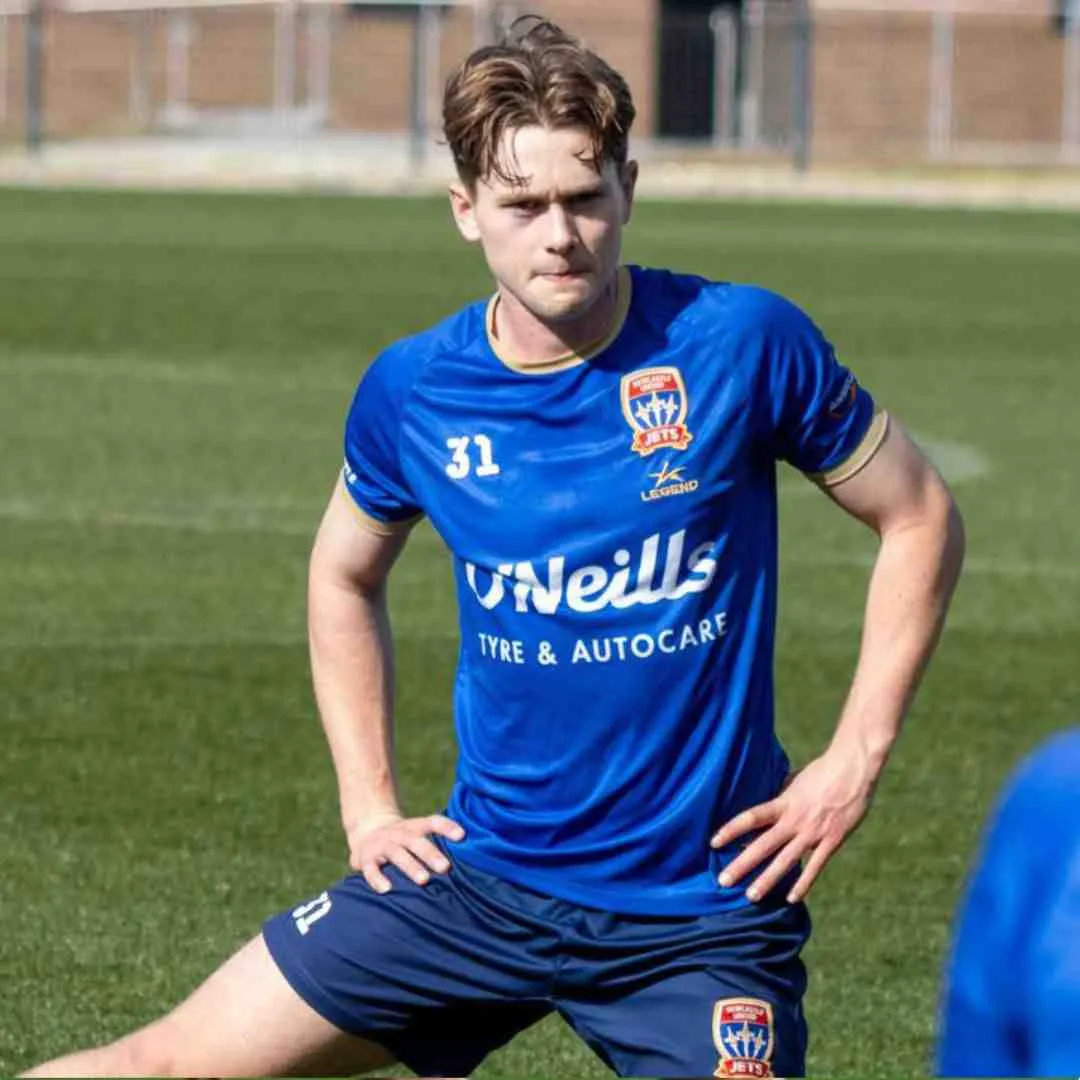
Lachlan Bayliss playing professional football
Lachlan Bayliss13 years old → New Zealand 2026 World Cup squad

Started with Coach Joe over 10 years ago, at 13. Today, at 23: A-League professional, New Zealand international — and named in New Zealand's squad for the 2026 World Cup in America.

James Bayliss playing professional football
James Bayliss15 years old → pro, twice

Started at 15 — now 25. Turned pro and won the A-League Championship with Central Coast Mariners, dropped to semi-pro — and fought back to pro with Auckland FC in the Oceania league. Back up after a downgrade is something most players never do once. He did it twice.

“My child has improved in all aspects of his game… The results speak for themselves as he moved from being a C-grade player last season to an A-grade player this season.”

David — Parent

“Charlotte says she likes working on her juggling with you and feels you have improved her dribbling. As a parent, I feel she gained both skill and confidence.”

Paul — Parent

“Joe explains why he uses his unique method… and has helped my son become a player who looks comfortable on the ball… he is the one we feel has taught him the most.”

Brendan — Parent

Wherever your child is on the road tonight — the next step is the same one this family took: keep going deeper.

You’re already on the road — keep going deeper

The Football Parent's Journey by Coach Joe — $279

Walk the whole road with Coach Joe — every stage, every trap, every exact word to say, organized by your child’s age. Every question the Milestones leave open gets its answer here.

  • Organized by age bracket (7–9, 10–12, 13–15, 16+) so you start where your child is
  • The failure-proofing toolkit, the system playbook, the money map, the reality check, and the exposure playbook
  • By the coach who developed two brothers from ages 13 and 15 to professional football
Get started now — $279

One-time payment · 7-day money-back guarantee, no questions asked. Your content stays yours.

Every question answered inside

No answers here — the answers live inside. Just so you know exactly what you're getting:

Which everyday sentences quietly build a fearful player — and what to say instead?
What's the full praise system that builds a brave one?
How do I run the 20-minute assessment of my own child?
How do I make weak-foot practice feel like a game instead of homework?
What do I say to the coach — word for word — and when?
When is it time to change clubs, and how do I do it quietly?
Who belongs in the support system — and who doesn't?
What should private coaching actually cost, and how do I test it's working?
How do I structure the week when school gets heavy?
How do I teach my child to handle failure and pressure?
What does the bad-game car ride look like at 14?
How do I know where my child REALLY stands — beyond our postcode?
What medical testing does my player need before the next level?
How do I approach clubs without burning my child's name?
What's on the trial-readiness checklist?
A2P 7-day money-back guarantee badge
Is this only for parents of “talented” kids?

No. It's for parents of kids who love football and want to see how far it goes. The reality check exists precisely so you never have to guess which one you have.

My child is 15 — is it too late to start?

The brackets stand alone. A 15-year-old's parent starts at the reality check and the exposure playbook; the earlier brackets become context, not homework.

Am I overreacting by getting help with this?

You're managing a ten-year project with real money and a child's confidence on the line. Parents prepare less for this than for buying a car. An hour of the right knowledge outperforms years of guessing — ask the parents above.

An hour ago, the car ride home was quietly teaching your child to play safe, and one big mistake could bury them for a whole game. You can fix both this weekend — free. That’s two stops on the road. Now walk all of it, with the coach who guided two brothers from 13 and 15 all the way to professional football — and give your child the parent every pro wishes they’d had.

Get started now — $279