Am I actually good enough?
You get a clearer baseline of the actions that matter at the next level, not a soft answer designed to keep you comfortable.
Amateur to Pro / A2P
Coach Joe's philosophy is simple: a player does not rise because they collect more drills. They rise when they can see the exact gap between how they train, how they perform under pressure, and what higher-level coaches need to trust.
For the player asking the real questions
A2P turns the private questions in a player's head into a practical development map: what is strong, what breaks under pressure, what must change first, and how to train it without wasting another month on vague effort.
You get a clearer baseline of the actions that matter at the next level, not a soft answer designed to keep you comfortable.
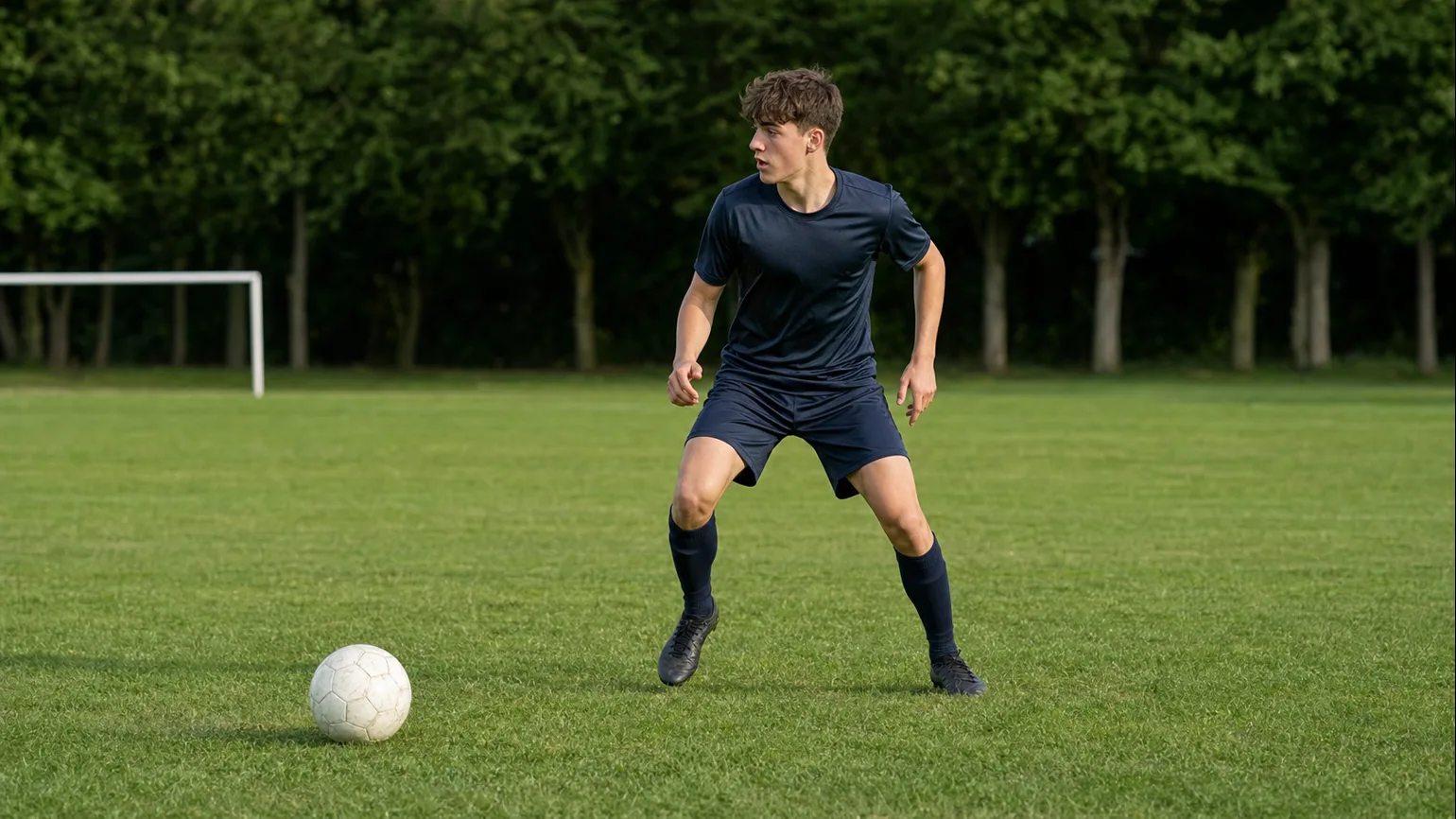
A2P looks at the pressure gap: scanning before the ball arrives, body shape, first action, and decision speed when space disappears.
The aim is to identify the one or two constraints causing the biggest performance drop, then build the next training block around those.
For parents who want truth before investment
Parents are often forced to choose between blind encouragement and brutal doubt. A2P gives a third option: honest standards, clear language, and visible next steps so support becomes calmer, smarter, and more useful.
Coach Joe's philosophy
A2P is built on the belief that players do not need more hype. They need a mirror, a standard, and a repeatable way to close the gap between potential and performance.
Confidence that is not connected to evidence collapses quickly. A player first needs to know what is really happening in their game.
The standard is not whether a skill works in comfort. The standard is whether it survives contact, fatigue, speed, and consequence.
Coaches trust repeatable players. A2P focuses on the tiny behaviours that make a player predictable to teammates and reliable to coaches.
The A2P pathway
Separate the surface mistake from the real cause: poor scan timing, closed body shape, rushed touch, late decision, or weak recovery response.
Do not attack every weakness at once. Pick the change most likely to improve match trust quickly.
Build a simple weekly evidence loop so the player and parent can see whether the habit is transferring into pressure moments.
90-second A2P readiness check
This is not a score to brag about. It is a quick way to reveal where the next honest conversation should start.
What changes when the work is honest
The player trains hard, the parent hopes it is enough, and both are left guessing which part of the game is actually limiting progress.
The player knows the key pressure habit to improve, the parent understands what to look for, and training has a sharper reason behind it.
Straight answers
No. A2P is preparation, not a fake guarantee. The value is honest feedback, sharper standards, and better readiness if an opportunity appears.
No. It is for serious players and families who want to stop guessing and start training against clearer standards.
The focus is not more drills for the sake of more work. The focus is diagnosing the pressure habits that decide whether skill transfers into real matches.
Use it to support the next focus calmly. Ask better questions, look for the right evidence, and stop measuring development only by selection, goals, or praise.
Amateur to Pro starts with truth
Start with the readiness check, then use Coach Joe's A2P lens to turn the result into a sharper development conversation.